
Every electric vehicle has a charging story, and it is not always as straightforward as plugging in and waiting for the battery to fill. Two vehicles connected to chargers at the same location can take very different amounts of time to charge, even when the equipment appears similar. What causes that difference, and why doesn’t a higher-powered charger always mean faster charging?
Understanding EV charging goes beyond knowing which charger to use. It offers a glimpse into how vehicles manage energy, how charging infrastructure is designed, and how everyday decisions can shape the overall charging experience. Whether you own an EV, are considering switching, or are exploring charging infrastructure for your business, understanding what happens behind the charging point can help you make more informed choices.
Ever Wondered What Really Happens When You Charge an EV
1. Understand the Difference Between AC and DC Charging
Electric vehicles primarily use two charging methods, Alternating Current (AC) and Direct Current (DC). The key difference is where electricity is converted into the form needed by the battery, which influences how charging equipment works and where it is typically used.
- AC charging supplies alternating current (AC) to the vehicle. The vehicle’s onboard charger converts it into direct current (DC), which the battery can store.
- DC charging converts alternating current (AC) into direct current (DC) within the charging equipment and supplies it directly to the vehicle’s battery system, bypassing the onboard charger’s AC-to-DC conversion stage.
- AC charging is commonly used at homes, offices, and residential complexes, where vehicles can remain parked for several hours. DC charging is often used at highway stops and public charging hubs where reducing charging time is a priority.
- The right method depends on the vehicle’s charging capabilities, how long it will be parked, and the purpose of the charging location.
- ChargeEZ offers both AC and DC charging solutions to support different vehicles, locations, and charging requirements.
2. Understand What EV Charger Power Ratings Mean
Charger power is measured in kilowatts (kW) and indicates the rate at which energy can be delivered. The higher the power rating, the more energy a charger can potentially deliver over a given period, provided the vehicle can accept it.
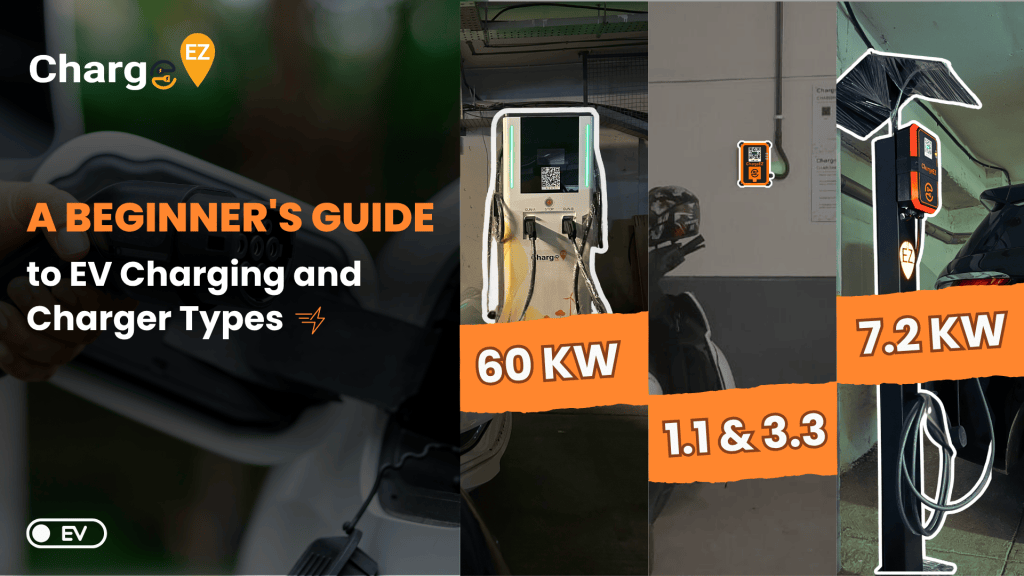
- 1.1 kW and 3.3 kW AC chargers offer lower power levels commonly suited to compatible electric two-wheelers.
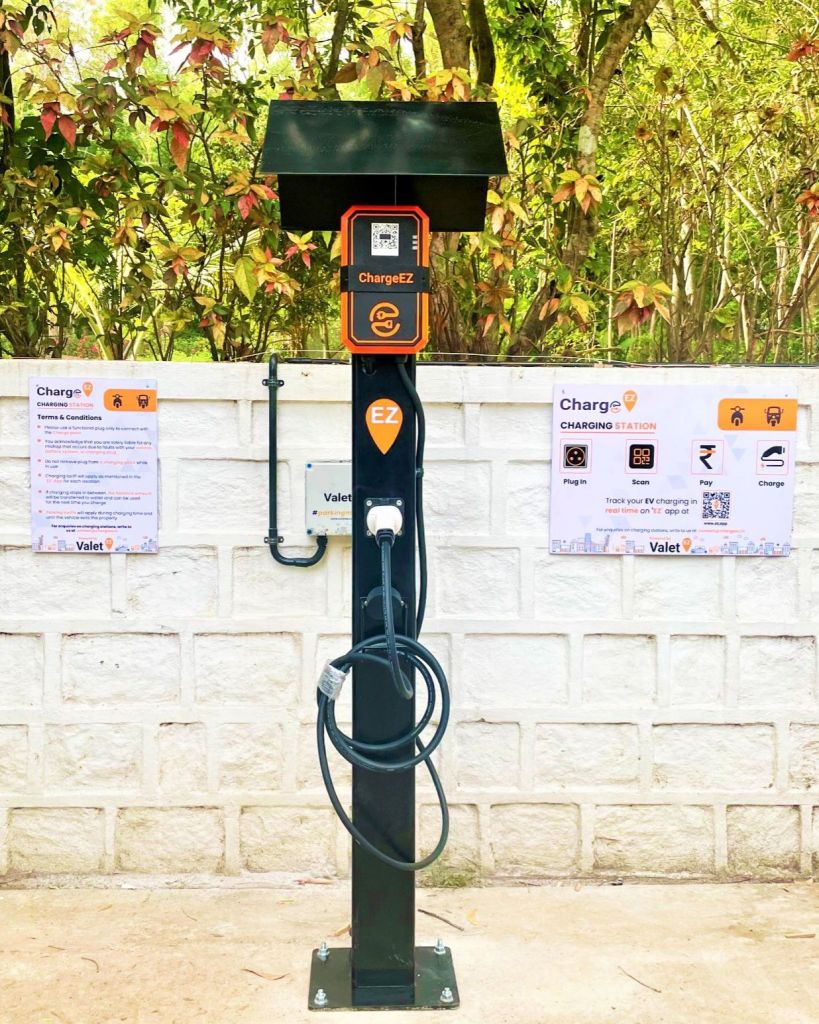
- 7.2 kW AC chargers are commonly used by compatible electric cars that support this charging rate.
- 30 kW, 60 kW and 120 kW DC fast chargers provide higher power output for vehicles capable of DC fast charging.
Why do power ratings matter? A charger’s power rating tells you how quickly it can supply energy to an electric vehicle. A higher-rated charger can deliver more power, but your vehicle must also be capable of accepting it. For example, if your car can handle only 7.2 kW, plugging it into a 60 kW charger won’t make it charge at 60 kW.
ChargeEZ offers charging options across these power ratings, helping businesses and property owners consider solutions suited to their vehicles and site requirements.


3. Estimate How Long an EV Takes to Charge
Charging time depends on how much energy the battery needs and how quickly it can receive it. A simple calculation can provide an estimate, although actual charging sessions may take longer.
- Check the battery capacity. Measured in kilowatt-hours (kWh), it indicates how much energy the battery can store. The energy required depends on the starting charge level and the target charge level.
- Calculate the estimated charging time. Divide the energy required by the charging power. For example, delivering 30 kWh at a constant 7.2 kW would take approximately 4.2 hours under ideal conditions, excluding charging losses.
- Use typical charging times as a rough guide. Electric two-wheelers may take around 2–6 hours to charge, while electric cars may take around 4–10 hours using AC chargers. These ranges are illustrative, not fixed. Actual charging times depend on battery capacity, vehicle specifications, charger power, and the amount of charge needed.
- Allow for charging losses. Not all the energy drawn from the electrical supply reaches the battery. Charging may also slow down as the battery approaches a high state of charge.
For a more realistic estimate, remember that charging power can change as the battery fills up. DC fast charging, in particular, often slows at higher charge levels, commonly around or beyond 80%, depending on the vehicle.
4. Understand Why Actual Charging Speeds Vary
The charging time calculated from a charger’s rated power is only an estimate. In practice, the power delivered can change throughout a charging session because of several factors.
- Vehicle charging limits: Every EV has a maximum charging rate it can accept. For example, a car that supports 7.2 kW AC charging will not charge faster just because it is connected to a higher-powered AC charger.
- Battery charge level: An EV usually charges faster when its battery is low. As the battery fills up, charging slows down, especially when it gets close to full.
- Battery temperature: Very hot or cold conditions can cause the vehicle to reduce charging power to protect the battery and maintain safe operation.
- Available electrical supply: The power available at a charging location may be limited by the site’s electrical capacity or shared between multiple vehicles charging at the same time.
Understanding these factors helps set realistic expectations and explains why charging times can differ even when vehicles use chargers with similar ratings.
5. Choose a Charger That Suits Your Vehicle and Usage
Choosing the right charger means looking beyond its power rating. The vehicle’s specifications, the charging location, and the way the infrastructure will be used all play a role.
- For electric two-wheelers, check the manufacturer’s recommended charging method, supported input power, and connector requirements before selecting a charger.
- For electric cars, confirm whether the vehicle supports AC charging, DC fast charging, or both, and check its maximum supported charging power.
- Consider the charging location. Homes, offices and residential complexes often suit AC charging, while public charging hubs serving compatible vehicles may benefit from DC fast charging.
- Plan for business demand. Commercial facilities should assess expected vehicle volumes, parking duration, electrical capacity and the mix of vehicles using the site.
- Consider day-to-day operations. Payment options, remote monitoring, and charging activity reports can help businesses manage their charging infrastructure more effectively.
- Look for an end-to-end solution. ChargeEZ supports EV charging across different vehicle categories and locations, with solutions designed to support the charging infrastructure lifecycle, from installation to ongoing monitoring and management.
The right setup should meet current charging needs while allowing for future demand, making compatibility, site planning, and operational requirements important parts of the decision.
Conclusion - Making Smarter Choices for EV Charging
Understanding EV charger types, power ratings, and charging speeds is the first step towards making informed charging decisions. The right solution depends on the vehicle, its charging capabilities, and the needs of the location, whether it is a home, workplace, or public charging facility.
With end-to-end EV charging solutions for different vehicle categories and applications, ChargeEZ helps businesses and property owners build charging infrastructure that fits their needs. By matching the right charging setup to real-world requirements, they can make EV charging more practical today and prepare for the growing adoption of electric mobility.