
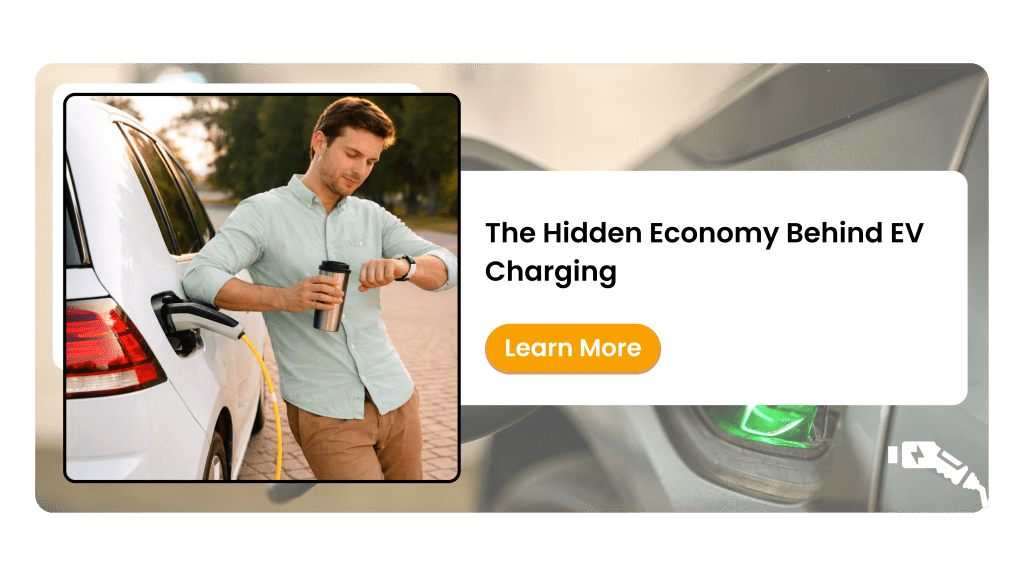
A New Way to Think About Charging Time
For the longest time, time spent on the road has been treated as something to minimise. The faster you move, the better, and anything that slows you down is seen as an inconvenience. But with electric vehicles, that mindset is starting to shift in a quiet, almost unnoticeable way. What used to feel like a pause is slowly turning into a moment that fits into your day instead of interrupting it.
This shift is also backed by how EV usage is evolving globally. According to the International Energy Agency, the number of public chargers worldwide crossed 2.7 million in recent years, with fast chargers making up a rapidly growing share. As charging becomes more integrated into everyday environments, it’s beginning to influence not just how we travel, but how we use the time in between.
How This Shift Plays Out in Reality
1. Charging Is No Longer a Stop; It Is a Time Window
EV charging is changing how we think about time spent on the road. Instead of being a quick stop like refuelling, it creates a usable window, one that people can plan around and make the most of in their daily routines.
- Unlike fuel stops that take just a few minutes, charging creates a time window that can be used productively.
- This shift allows users to align charging with everyday activities instead of treating it as a separate task.
- Over time, this turns charging into a predictable and manageable part of daily schedules.
2. The Rise of Smarter Urban Routines
As charging becomes more common, it’s not just routines that are changing; it’s how people decide where to go. In fact, studies suggest that a majority of EV users now prefer “opportunistic charging” choosing places where they can charge while doing other activities.
- Charging availability is starting to influence how people plan their trips, shaping not just where they stop, but even the routes they take.
- Over time, this creates a pattern where mobility and location choice are influenced as much by charging access as by the activity itself.
3. Businesses Are Designing Around This Waiting Time
What looks like “waiting time” is quietly turning into one of the most valuable opportunities for businesses today. As EV users spend more time at a location compared to traditional fuel stops, this extra time naturally translates into higher engagement, better experiences, and increased interaction with the space around them.
- Longer customer presence increases the chances of impulse spending, repeat visits, and deeper engagement with products or services.
- ChargeEZ enables this by setting up EV chargers across high-engagement spaces like malls, coworking hubs, residential complexes, and commercial destinations, helping businesses make the most of this time window.
4. Charging That Fits Into the Background
While some charging happens during short stops, a lot of it takes place when vehicles are parked for longer periods. In these situations, charging doesn’t need attention; it simply fits into the background while people go about their day.
- AC chargers are suited for everyday spaces like apartments, offices, and parking areas, where vehicles stay longer and can charge steadily in the background without interrupting routines.
- For quicker turnarounds, DC fast chargers step in at public and high-traffic locations, delivering faster top-ups when users need to get moving again.
- ChargeEZ enables both these use cases through a range of charging solutions, from 30 kW, 60 kW, and 120 kW DC fast chargers, to 1.1 kW options for two-wheelers and 3.3 kW and 7.2 kW setups for cars, ensuring the right charging speed is available for every kind of stop and stay.
5. Charging Time Is Becoming an Economic Opportunity
As charging becomes more consistent across daily routines, these short time windows are starting to shape how value is created around movement. What was once idle time is now quietly contributing to new patterns of spending, interaction, and micro-engagements across everyday spaces.
- These charging windows often lead to small but frequent spending moments, adding up to a larger shift in how people engage with services and retail.
- Over time, this is creating a new layer of urban activity, where short, predictable time blocks begin to influence how businesses design experiences and capture attention.
Conclusion - Where Time Meets Everyday Ease
As EV adoption continues to grow, it’s clear that charging is no longer just about powering vehicles. It’s shaping how time is used, how spaces are experienced, and how everyday movement feels. With ChargeEZ enabling this shift across different environments, charging is becoming more seamless and better integrated into daily life.
For users, this change brings a sense of ease that wasn’t there before. Charging no longer feels like a pause, but something that fits naturally into their routine. It allows people to move with more confidence, knowing their time is being used well. And in the end, that’s what truly makes the experience better, not just efficiency, but peace of mind.