
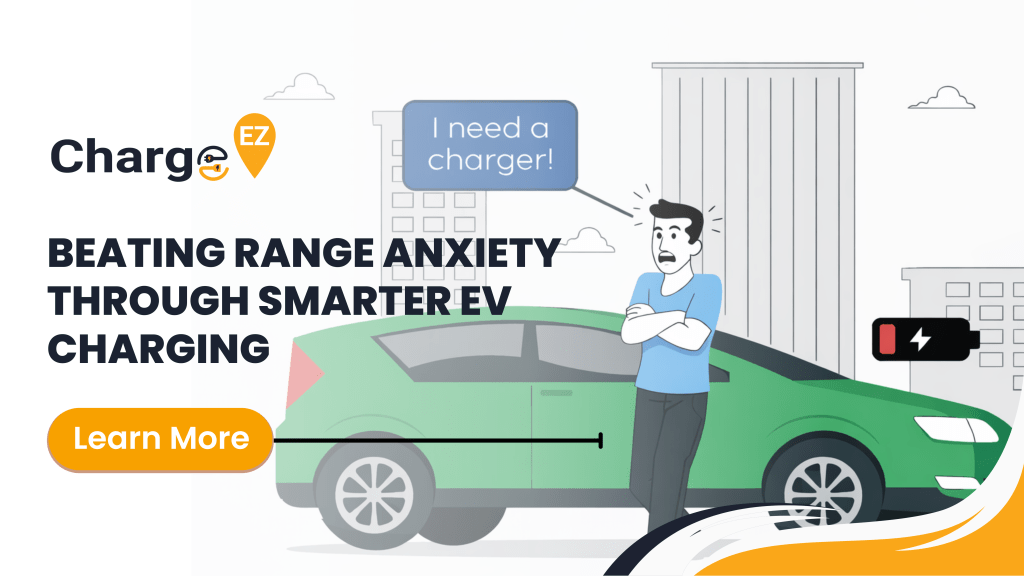
Why EV Charging Needs a Rethink
Electric vehicle charging has quietly become part of daily urban mobility and is no longer just a futuristic concept. In India, almost 58% of potential EV buyers say they’re discouraged by range anxiety, especially when charging infrastructure feels uncertain. While battery size and range numbers have improved significantly, drivers increasingly prioritise charging accessibility and ease over raw figures.
Range anxiety is a concern rooted more in uncertainty about charging access than real battery limitations. For most users today, how smoothly an EV fits into daily routines matters more than how far it can go. When charging becomes predictable, confidence rises, and anxiety begins to fade. This blog explores how such systems work and why they matter for urban EV expansion.
Here Is What Really Matters
1. Modern EV Batteries Are Already Sufficient
Regular urban travel is a good fit for modern EV batteries since they are designed to withstand daily mobility without experiencing any problems. Charging is not a daily requirement for most users. Today, battery capacity is no longer the main concern for everyday urban travel.
- Daily driving patterns in cities are consistent, allowing EV batteries to be used steadily rather than aggressively.
- Since the users are unsure of where they can charge next and whether the charger will be working when they get there, they frequently underuse the range that is available.
2. Why Range Anxiety Hasn’t Disappeared
Range anxiety persists even as charging infrastructure expands because drivers often lack reassurance during active driving. The issue is less about total distance and more about confidence when decisions need to be made in real time.
- Inconsistent signage, incomplete maps, or outdated information reduce a driver’s ability to make quick charging decisions.
- Limited visibility of alternative charging options increases perceived risk during longer or unfamiliar routes.
- Drivers compensate by adjusting speed, route, or usage patterns to avoid unexpected battery drops.
- Over time, this cautious behaviour becomes habitual, sustaining anxiety regardless of infrastructure growth.
3. How Destination Charging Fits Daily Life
Destination charging places chargers at locations people already visit and park at regularly. This shifts charging from an active task to a passive routine. As a result, EV ownership feels simpler and more convenient.
- Charging at homes, offices, malls, hotels, and residential communities removes the need for separate charging trips.
- ChargeEZ supports this shift by placing multiple chargers across commonly visited venues, allowing users to charge conveniently as part of their routine.
- Vehicles can charge during work hours, overnight stays, or shopping visits without affecting daily schedules.
- Drivers stop planning routes around chargers and instead charge naturally as part of their normal routine.
4. Charging Ecosystems Power Urban EV Growth
Successful urban EV adoption depends on a well-planned charging ecosystem that supports different vehicles and usage patterns. ChargeEZ contributes by offering both AC and DC chargers suited to varied environments. The right mix of chargers ensures scalability and convenience.
- AC chargers support routine, longer-duration parking scenarios commonly found in residential and workplace settings.
- 1.1 kW AC chargers are designed for two-wheelers and are ideal for overnight or extended parking durations.
- 3.3 kW AC chargers support both two- and four-wheelers, making them suitable for mixed-use urban locations.
- 7.2 kW AC chargers are primarily used for four-wheelers and enable faster charging during daily parking windows.
- ChargeEZ also offers DC fast chargers that deliver rapid charging at high-traffic and time-sensitive urban locations.
5. Responsible Use Builds EV Confidence
As EVs become part of everyday mobility, safe and responsible usage plays an important role in building long-term trust. While infrastructure enables adoption, how users operate and maintain their vehicles also shapes the overall EV experience. Simple habits can significantly improve safety and reliability.
- Following manufacturer guidelines for charging helps protect battery health and ensures safe vehicle operation.
- Avoiding overuse of fast charging for daily needs can support long-term performance and system stability.
- Being mindful of proper parking and charging etiquette improves safety in shared residential and public spaces.
Conclusion - Making Everyday EV Use Effortless
ChargeEZ plays a role in this shift by helping charging blend seamlessly into everyday destinations rather than forcing detours or disruptions. By supporting a mix of charging solutions across urban spaces, it contributes to a system where charging feels expected rather than stressful. Over time, convenience becomes a quiet confidence rather than a conscious concern.
Ultimately, the real success of EV adoption lies in how people feel while using their vehicles every day. When charging fits naturally into routines, drivers gain peace of mind and trust the journey ahead. Mobility becomes calmer, more predictable, and less driven by constant calculations. As confidence grows, EVs stop feeling like a compromise and become the obvious choice.