
Getting Started with EV Charger Installation
Electric vehicles are no longer a distant concept in India; they are quickly becoming a part of everyday mobility. With rising fuel costs, environmental awareness, and strong policy support, more individuals and businesses are making the shift to electric mobility. But while buying an EV is an exciting step, installing a charger is often where questions begin. Understanding a few key factors beforehand can make the entire process far smoother and more efficient.
India recorded over 2.3 million EV sales in 2025, accounting for nearly 8% of all new vehicle registrations, reflecting how quickly adoption is accelerating across segments. As more EVs hit the road, the need for accessible and reliable charging infrastructure is growing just as rapidly. For property owners, businesses, and residential communities, knowing what goes into EV charger installation can make planning much easier.
Things to Know Before You Begin
1. Is Your Property Ready for an EV Charger?
Before installing an EV charger, it’s helpful to take a quick look at your property’s electrical readiness. A few basic checks are made beforehand to ensure the installation process is smooth and that the charger operates reliably.
- Your property should have sufficient electrical load capacity to support the charger along with other appliances.
- A dedicated electrical connection helps maintain safe and consistent power delivery during charging.
- Proper grounding protects the charger and the vehicle from potential electrical faults.
- To enable smart charging features, the charger also requires a stable internet connection. This allows the charger to connect with the ChargeEZ’s EZ Mobility App for activation and management.
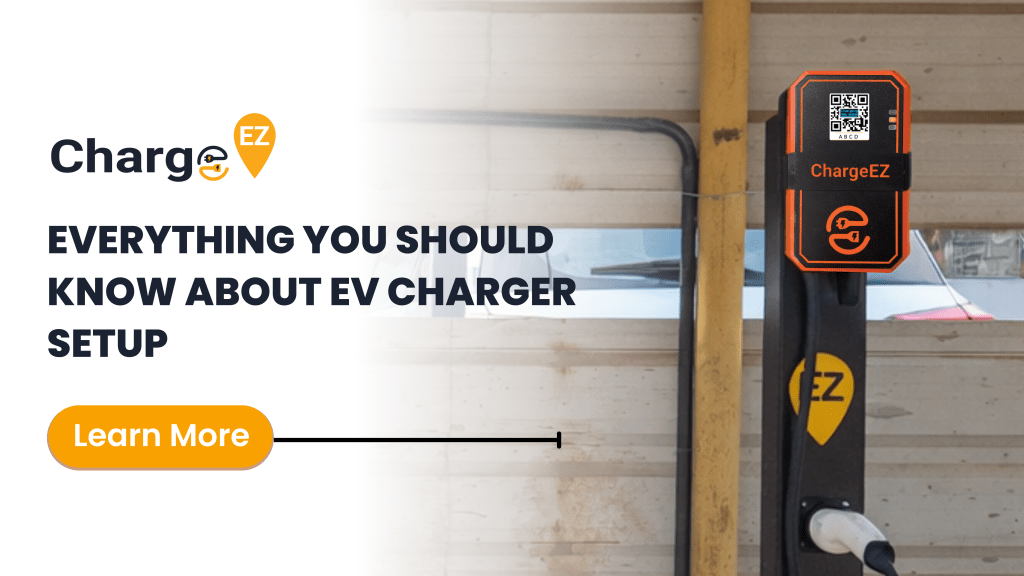
- Once connected, users can simply scan the QR code available on the charger to initiate the charging session.
2. Choosing the Right Spot for Your EV Charger
Once the electrical readiness is confirmed, the next step is deciding where the charger will be placed. EV chargers can either be mounted on a wall or installed on a pedestal pole, depending on the available space near the parking area. The idea is simply to ensure the charger is conveniently positioned so the vehicle can easily access it while parked.
- Wall-mounted chargers are preferred when a stable wall is available near the parking spot.
- If no wall is available, a pedestal installation can be used, where the charger is mounted on a dedicated pole.
- The choice between wall-mounted and pedestal installation largely depends on the specific layout of the parking area and how easily the setup can be implemented at the location.
3. Do You Need Permission to Install an EV Charger?
Installing an EV charger is usually much simpler than many people assume. To support the growing adoption of electric vehicles in India, the government has made the process relatively straightforward for both homeowners and businesses.
- No government permissions or special licenses are typically required to install a private EV charger on your property.
- Policies supporting EV adoption have also streamlined installation norms, making it easier for residential societies and commercial spaces to set up charging infrastructure.
4. Selecting the Right Charger for Your EV
Not all EV chargers are the same, and selecting the right one depends on the vehicle type you have and how quickly you want it to charge. Chargers generally fall into two categories: AC chargers for everyday charging and DC chargers for faster charging. Understanding this difference helps yo/u choose the option that best fits your needs.
- AC chargers are commonly used in homes, offices, and residential parking spaces.
- ChargeEZ offers a wide range of AC chargers, including 1.1 kW (ideal for two-wheelers), 3.3 kW (compatible with both two-wheelers and four-wheelers), and 7.2 kW (designed for four-wheelers).
- DC fast chargers are typically used in commercial or public charging locations where quicker charging is required.
- ChargeEZ also provides DC chargers available in 30 kW, 60 kW, and 120 kW capacities for rapid charging.
5. How EV Charger Installation Works
Once everything is planned, the installation itself is usually quite straightforward. After an initial site inspection, the setup process is carried out by trained professionals to ensure the charger is installed safely and functions properly.
- ChargeEZ streamlines the entire process of installing EV chargers at sites.
- The installation team manages everything from site preparation to electrical integration.
- All chargers are thoroughly tested after installation to ensure safe and reliable operation.
- ChargeEZ also offers support solutions to make the process smoother, along with continued assistance even after the charger is up and running.
Conclusion - Charging Towards the Future
As EV adoption continues to grow, having dependable charging infrastructure is becoming increasingly important. ChargeEZ is built to make this transition easier by offering a range of charging solutions designed for different vehicles and use cases. With streamlined installation and ongoing support, the goal is to ensure that setting up EV charging is simple, reliable, and convenient.
For EV owners and those planning to switch, accessible charging brings greater confidence to everyday mobility. As infrastructure continues to expand, installing and using a charger will become even more seamless for homes, workplaces, and shared spaces. In the years ahead, reliable charging will play a key role in making electric mobility a comfortable and worry-free part of daily life.